Search!
Showing posts with label science. Show all posts
Aug 14, 2012
Get Your (Virtual) Ass To Mars!
The landing of NASA's Curiosity rover onto the surface of Mars was exhilarating to say the least, and after updating the rover's software over the weekend, we're probably about a week away from the rover taking its first real drive around Gale crater. In the meantime, Curiosity has already sent back some absolutely stunning pictures, including the view above.
A little poking around the web has revealed a 360 degree panoramic view of the Martian landscape, sent back from the red planet's newest resident. (I know there are weird indicators that this panorama might actually be of New Mexico, but I think that's actually just mislabeling. Either that I'll be apologizing later along with the LA Times and Huffington Post.)
Curiosity rover: Martian solar day 2
That is flat out astounding.
There are fewer realizations in this life that disappoint me more than the knowledge that I will almost certainly never get a chance to set foot on another planet; I therefore consider myself lucky to have the Opportunity (Martian rover pun!) to at least live in an era where I can glimpse what future generations will almost certainly get to experience firsthand. In fact, last week I saw a similar view (seen here, courtesy of a previous rover) on my wife's cell phone while sitting in the bleachers at a football game. Let that sink in for a minute.
We certainly live in interesting times, and there's plenty more to come! Check out Time's spread on some of NASA's future pursuits through the Innovative Advanced Concept Program.
Sep 22, 2011
EINSTEIN WEPT! Is Warp Drive On The Way?
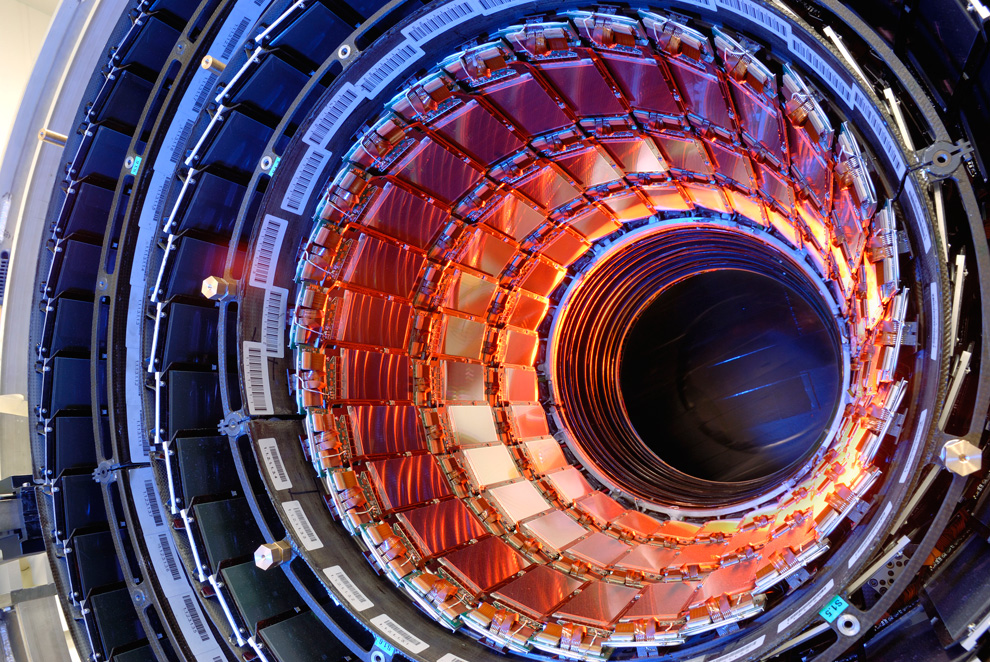
A team of researchers at CERN report that they've recently observed neutrino particles moving approximately 60 nanoseconds faster than the speed of light.
MIND. BLOWN.
One of the basic tenets of Einstein's theory of special relativity is that the speed of light is the absolute speed limit for the universe. Nothing goes faster. It's pretty much the cornerstone of the last 50 years worth of physics, so suffice it to say this will be a VERY big deal if it's confirmed.
Honestly, I have my doubts. I'm sure that the CERN team did their due diligence before announcing their results, but you can be certain that there will hordes of scientists banging down the door to dispute (or verify) the CERN results. At the moment, it's still too early to tell. My money's on some sort of instrument failure.
Aug 24, 2011
This Week In Outer Space: History Edition!
We've got a few interesting milestones to celebrate this week, so let's get to it!
Forty-five years ago yesterday humanity got their first glimpse of planet Earth as viewed from space. NASA's Lunar Orbiter 1 snapped the above photo on August 23, 1966 from orbit around the moon. It's a pretty stunning image, even in black and white. Check out more details about the history and the legacy of the LO1 and it's sweet camera right here.
Five years ago today the solar system lost one of its own. That's right, it's officially a half-decade since Pluto was demoted to dwarf planet status. Lest you pity the poor planetoid, know that he's not totally alone out there. Pluto is actually one of five dwarf planets in orbit around the sun, along with Ceres, Eris, Haumea and Makemake. (No, I did not make that last one up, it's named after a Polynesian deity.) For the record, this is a great example of why I love science; after more than 75 years of saying we live in a nine planet system, we still allow new discoveries to alter our perceptions and challenge our reality. Nothing is sacred and that which we hold as "fact" is always contingent upon the burden of proof. For a really great look at the history of Pluto and its subsequent demotion, I recommend Neil deGrasse Tyson's excellent (and short!) book The Pluto Files.
In more current news, a Russian supply ship headed to the International Space Station was lost before achieving orbit this afternoon. The Progress 44 cargo ship was scheduled to dock with the ISS on Friday and unload approximately 2.9 tons of food, fuel and supplies to the ISS. The craft has reportedly crashed in a remote area of Siberia, although it is not yet known what sort of damage may have resulted on the ground. Progress 44 was fortunately unmanned and, according to NASA, the final space shuttle mission actually left the ISS oversupplied, so there's no danger of astronauts starving to death in orbit.
Speaking of dead astronauts, I couldn't not include this set of photos featuring an anonymous astronaut in a wide variety of suicidal situations. Aside from the obvious fish-out-of-water vibe that comes from seeing a full on spacesuit in everyday domestic settings, I think the collection serves has a darkly humorous afterthought to the (temporary) death of the US manned space program.
Aug 16, 2011
Non-Spoiling Food: We're Gonna Need A Bigger Fridge...
Bisin.
Learn it, love it, eat it.
While studying digestive organisms, microbiologists in Minnesota have discovered a naturally occurring preservative which they believe can be utilized to increase the shelf life of most foodstuffs, including meat, dairy, eggs and fish. And I don't mean you can get an extra week out of that deli cheese. We're talking months, or maybe even years. Yeah.
This isn't just a matter of convenience. Aside from keeping your food fresh, bisin also keeps bacteria at bay, dangerous stuff like E. coli, salmonella and listeria. That means this little sounds-like-delicious-buffalo-meat-but-isn't substance could potentially prevent thousands of cases of food poisoning and even death. There are some other side benefits as well, like pregnant women being able to eat soft cheeses danger-free. (This is a sizable concern to some, like my fiance. And no, Mom, we're not planning on a shotgun wedding.)
I'd think would drive up membership at wholesale stores like Costo and BJ's, as one could now buy food in bulk without worrying about having to throw half of it away before getting the chance to eat it. Then again, it might also mean less frequent shopping, so who knows.
Aug 12, 2011
Got Malaria? Step Into My Microwave...
Malaria is a stone cold bitch. The World Health Organization estimates that over 3 billion people live in areas where they are in significant risk of contracting the parasites, which kills about a million people each year. Moreover, humanity's efforts to combat the malaria have been problematic at best. Malaria continues to evolve and outsmart drug treatments, and now the nasty little critters have even become multi-drug resistant. Clearly a radical solution is needed.
How about a microwave?
Researchers in Panama and Pennsylvania State University believe they've developed a method by which focused, low level microwave radiation super-heats residual iron deposits leftover from when the parasites are feasting on human blood. The process actually makes the parasites EXPLODE, leaving healthy tissue unaffected. The researchers are hoping to build human-sized microwave emitters to get the job done, similar to those newfangled full body image scanners at airports.
The Bill and Melinda Gates Foundation has been at the forefront of the fight against malaria and they're sponsoring a second round of research into this new method as part of a grant that sounds not unlike NASA's NAIC program. While developing a more effective cure is the first step, the next step involves convincing the people in the affected developing countries that we're not trying to kill them or sterilize their women.
Aug 11, 2011
INNOVATION LAB: Instant Bricks, Robot Skin & (Missing) Gliders
Thought I'd give a quick rundown of some really interesting inventions and innovations that have hit the wire this week.
First up we've got CO2 Structure, a new creation out of Japan designed to help rebuild areas affected by natural disasters like earthquakes. TIS Partners out of Japan discovered that by blowing CO2 into loose silica, the material instantly hardens into whatever shape is chosen, like say, a brick. By adding an organic material like epoxy or urethane, you get a substance that's up to 2.5 times stronger than concrete, requires next to no steel reinforcement and takes about 60 seconds to create. That's compared to up to 28 days for concrete to set into its maximum potential strength. In areas like Japan and California that are not only struck by frequent earthquakes, but also strong aftershocks, CO2 Structure could be a serious game changer when it comes to reconstruction.
Next we've got GelSight, a layer of rubber with a painted skin that will conform to a surface and reveal microscopic details. Originally developed to give robots a more accurate sense of touch, GelSight can be combined with a lit camera to create incredibly detailed 3D models. Obviously the material has the potential for some incredible and varied applications, notably in fields like forensics and ballistics.
Finally, there's today's test launch of DARPA's Falcon Hypersonic Glider, which is designed to be launched into the upper atmosphere then glide down at speeds of up to Mach 20 and launch conventional weapons at any target on the planet within an hour. This is the second test flight for the unmanned Falcon: the first test was last April and it did not go well at all. In fact, the Air Force lost contact with the glider after a mere 9 minutes. Today's test went much better. This time they got a full 36 minutes into the flight before they lost telemetry and the Falcon went off the grid. (Lest you think there's a stray DARPA glider out there waiting to be found, rest assured that the craft has a built in self-destruct mechanism.) The Falcon is an incredibly cool looking ship. Maybe next time they'll actually be able to land the damn thing.
Aug 9, 2011
Turn Your Laptop Into A Superconducting Supercollider
I've long been an advocate and participant in the SETI@home program, which farms out the processing of dense radio telescope data to millions of personal computers. This allows the researchers at SETI to increase their computer power exponentially at no cost, plus if your machine is responsible for any major discoveries, you get a slice of the credit.
A few other organizations have adopted the same model over the years but this is by far the most interesting participant to date: the Large Hadron Collider at CERN. In spite of some early bird-based sabotage, the European Particle Physics Labratory is opening the doors so to speak, parceling out the computational work for some of their particle acceleration simulations before the experiments are actually run in the LHC. The extra processing power not only allows them to calibrate and fine tune the collider, but it could also allow them to analyze the resulting data in a much more timely fashion.
The software is a simple install and runs in the background of your computer while the machine is idle, so it shouldn't notice any appreciable slow down in your system. And really, how could you not want to be a part of this kind of scientific awesomeness?
Click it here for the free download!
Aug 8, 2011
Earth's (Invisible) Ring
If you grew up wishing you lived on Saturn, Jupiter or Uranus just so that you could look up into the sky to see supercool rings going 'round your world, I've got good news for you: Earth has a ring too! But don't rush outside with your fancy camera just yet, as our ring is invisible.
Yes, along with the cloud of positrons that's floating above the atmosphere, Earth also has an invisible ring of anti-protons hovering in the Van Allen radiation belt. Anti-protons are, shockingly enough, the anti-matter counterpart to protons, just as positrons are the ying to the electron's yang. New Scientist has the story, in which they posit that this newfound collection of naturally occurring anti-matter could be used to fuel future generations of spacecraft.
So it looks like someone finally made an honest woman out the planet. My money's on Mercury. He's such a smooth talker...
Aug 1, 2011
And He Finished His Pepsi And Said "Let There Be Light!"
Now THIS is innovation.
The fine folks at MIT put on their thinking caps and came up with this brilliantly simple way of bringing indoor lighting to villages with no electricity. By filling a one liter plastic bottle with water and pacing it in a hole specially cut into the roof of a house, the sunlight refracts through the water and gives off the equivalent light of a 60W incandescent bulb. Add a little bleach to keep bacteria from forming and clouding up the water and you've got a light source that will last you up to five years.
Sadly Reuters is stingy with their embedding, so click it here to see the "Liter Of Light" in action.
Here's my favorite part of this story: anyone could have come up with this solution. Seriously, if given a little time and focus, a fourth grader could've figured this out. The world needs more of this type of innovation; simple solutions to serious problems. On that note, I was recently able to witness a day of really excellent TED talks and I'll be putting up videos from some of my favorites in the coming days and weeks. Stay tuned.
Jul 29, 2011
This Week In Outer Space
The space shuttle program may be dead and buried, but there's still plenty of activity beyond Earth's atmosphere!We've heard plenty of talk from NASA folks about how private spaceflight would help bridge the gap in America's ability to travel off world. Lest you think they were kidding, this past week NASA and SpaceX came to an tentative agreement to allow SpaceX's Dragon capsule to dock with the International Space Station this coming November, which would make it the first privately owned craft to do so. Initially SpaceX wasn't scheduled to dock with the station until later next year, but they've stepped up their timetable and are looking to combine the objectives of their next two scheduled test flights into a single mission. Here's hoping. (HT to @erchristensen for the heads up.)
Astronomers recently discovered the largest known source of water in the universe. How much water you ask? Try 140 trillion times the mass of all the oceans on Earth. How did they find this massive cloud of vapor? Seems we're currently seeing it get sucked through a quasar. Not only that, but the quasar is 12 billion light years away, meaning that the water we're seeing was present only about a billion and a half years after the formation of the universe itself. That makes this misty discovery not only the largest source of water in the universe, but also the oldest.
Swedish researcher Peter Lindberg was conducting sonar sweeps of the ocean floor near Finland in search of a 100 year old shipwreck carrying crates of extremely rare champagne. Instead they found this mysterious circular object, complete with scoring and streaks across the ocean floor that imply the object was moving before it settled in its final location. Immediately people jumped to the "flying saucer" conclusion. I'm waiting to hear that it's actually some kind of viral marketing campaign for the upcoming prequel to John Carpenter's The Thing.
And finally, while all the popular kids want to go to Mars, the folks at NASA know that Jupiter's the place to be. Next week they'll be launching the Mission Juno satellite, whose mission will bring it in orbit of the gas giant in order to take detailed scans below the atmosphere. NASA hopes to learn more about the formation of our solar system by studying the planet that we believe was formed first after the sun itself. I'm hoping they discover that Jupiter's infamous "red eye" is actually a ginormous reservoir of tomato soup. Yum.
Stay tuned for more updates from beyond the stars...
Jul 25, 2011
Building A Better Mousetrap...For Toothpaste
If you ever find yourself in the position to visit a design school or, even better, go to an end-of-the-semester showcase, don't hesitate. You will inevitably find incredibly cool concepts and models for everything from future cars, to smarter designs for everyday household objects. Case in point: SavePaste, an incredibly cool and simple redesign of the standard tube of toothpaste. SavePaste gets a number of things right. First of all, it eliminates the need for extra packaging, selling you a cardboard tube directly. Not only does it also feature a space-saving design, but it actually allows you to utilize ALL the toothpaste in the tube, eliminating the need for extra folding, rolling, squeezing, and various other forms of toothpaste origami. And, of course, it folds flat when empty and is ready to be recycled.
Sadly SavePaste is still only a design concept, but I'm holding out hope that it appears in my local CVS while I've still got teeth to brush. Click it here for all the details.
Jul 21, 2011
Farewell Atlantis
In the wee small hours of this morning, the space shuttle Atlantis touched down in Florida, bringing STS-135 to a close and officially ending the US space shuttle program. As has been well documented by this point, it's a bittersweet ending, as the mothballing of the shuttle fleet leaves America with no means of autonomous space flight. From now on, we'll be depending on the Russian Soyuz craft to get our astronauts to the ISS, a prospect that has left many Americans more than a bit dismayed. (Although none of this righteous indignation ever seems to manifest itself whenever NASA gets its budget slashed...)
Fact of the matter is that the decommissioning of the shuttles was long overdue, and while I'm disappointed in our lack of an immediate replacement, I give the White House credit for recognizing and admitting that the Constellation program that was intended to succeed the shuttles was, in fact, both costly and inefficient. Moreover, starting over from scratch has allowed NASA to refocus the goals of our new ships, which will now be focused not simply on returning to the moon, but on long distance spaceflight as well, sending astronauts to asteroids, Mars and beyond. While it will leave a gap in our spaceflight capabilities, scrapping the Constellation program looks to have been the right move and I look forward to seeing the next generation of U.S. spacecraft.
To go out on a high note, I'll leave you with this link to the In Focus photo blog, which has put together an excellent gallery of images that depict STS-135 from start to finish. It also includes my absolute favorite photo to come out of all the media hoopla surrounding the final shuttle launch: that of a father and son who were present for the the first shuttle launch in 1981, and re-staged their photo 30 years later at the final launch.
Jul 18, 2011
Folks In Atlantis Wore Kilts
I've been sitting on this article for about a week and it's been hiding in the background of my browser, nagging at me to write about it.
Last week geologists discovered a lost continent off the coast of Scotland, a landmass which rose from the seafloor approximately 55 million years ago and then sank into the waters again about a million years later. That's a mere eye-blink in geological terms, but in the human experience it's obviously quite different. Imagine if Australia suddenly crumbled into the ocean. Exactly.
The discovery seems doubly appropriate in light of the nature of this rapid/not-so-rapid rise and fall: the continent, complete with mountains and rivers by the way, was formed by a thermal event beneath the ocean floor which caused the seabed to literally explode upwards and solidify, simultaneously expelling large quantities of methane gas which would have had disastrous environmental effects on the surrounding area. A subsequent cooling period is likely what caused the island to later sink.
Long story short, a previous period of drastic climate change (i.e. global warming) was responsible for both the birth and death of an entire continent which lasted longer than human civilization. Seeing as I was still digging my house out of the snow in April and that a record heat wave is currently moving through the midwest and heading for my doorstep, this particular discovery seemed worth sharing.
Check out the full report here.
Subscribe to:
Posts (Atom)